






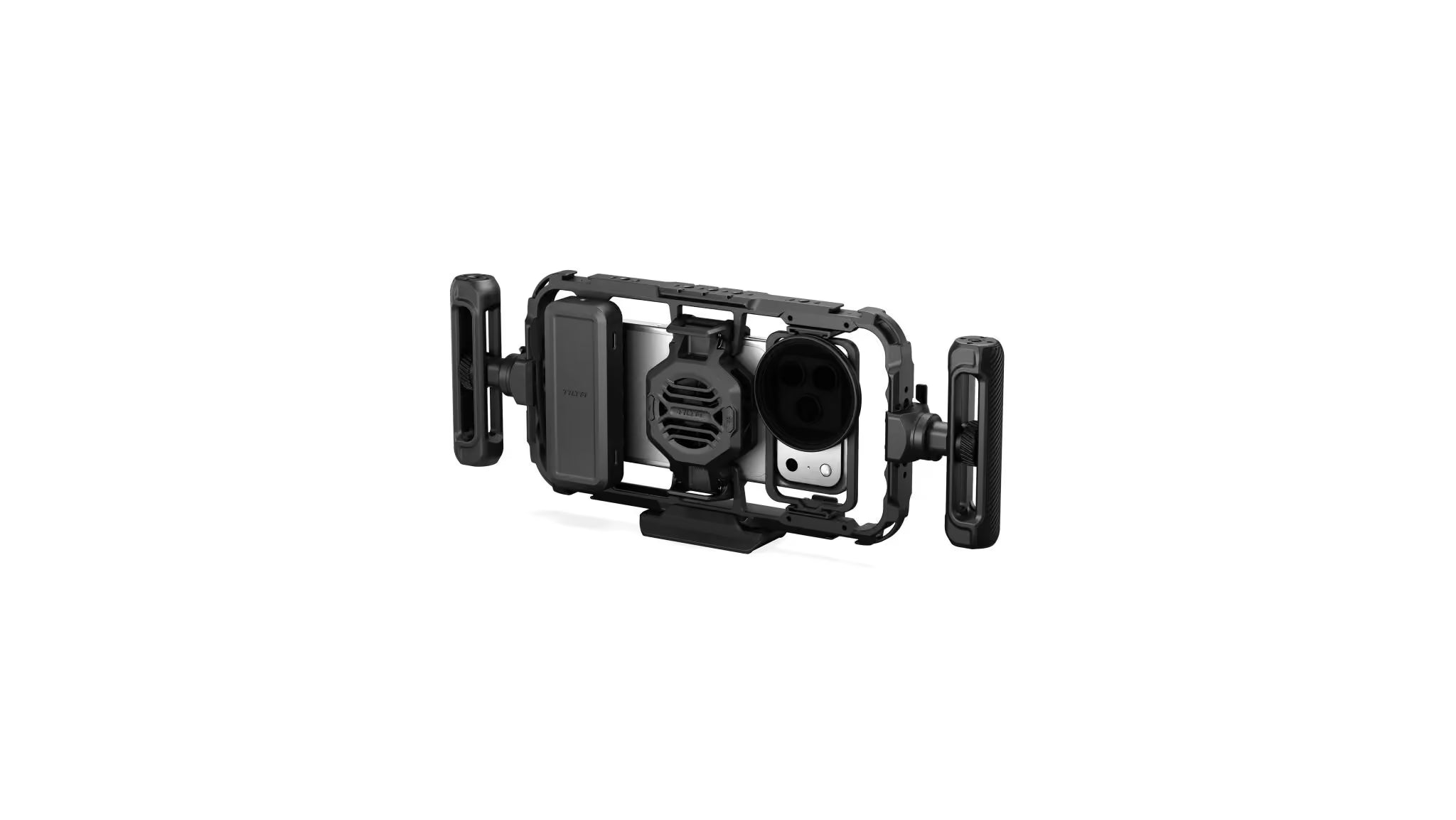


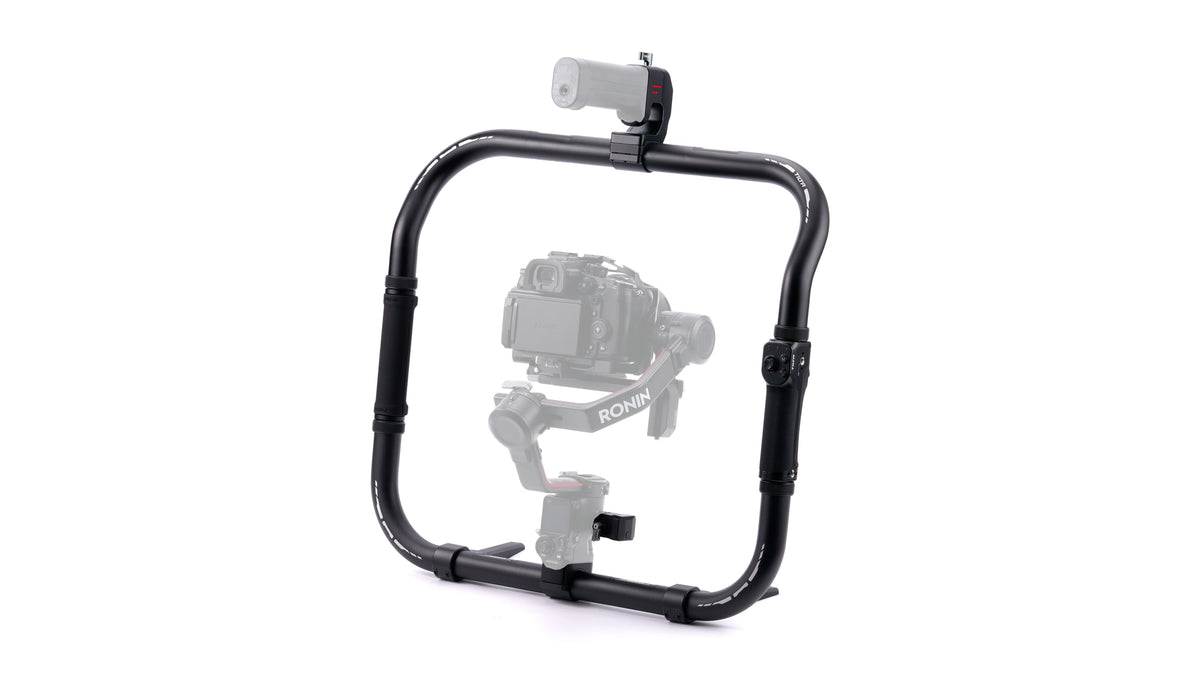


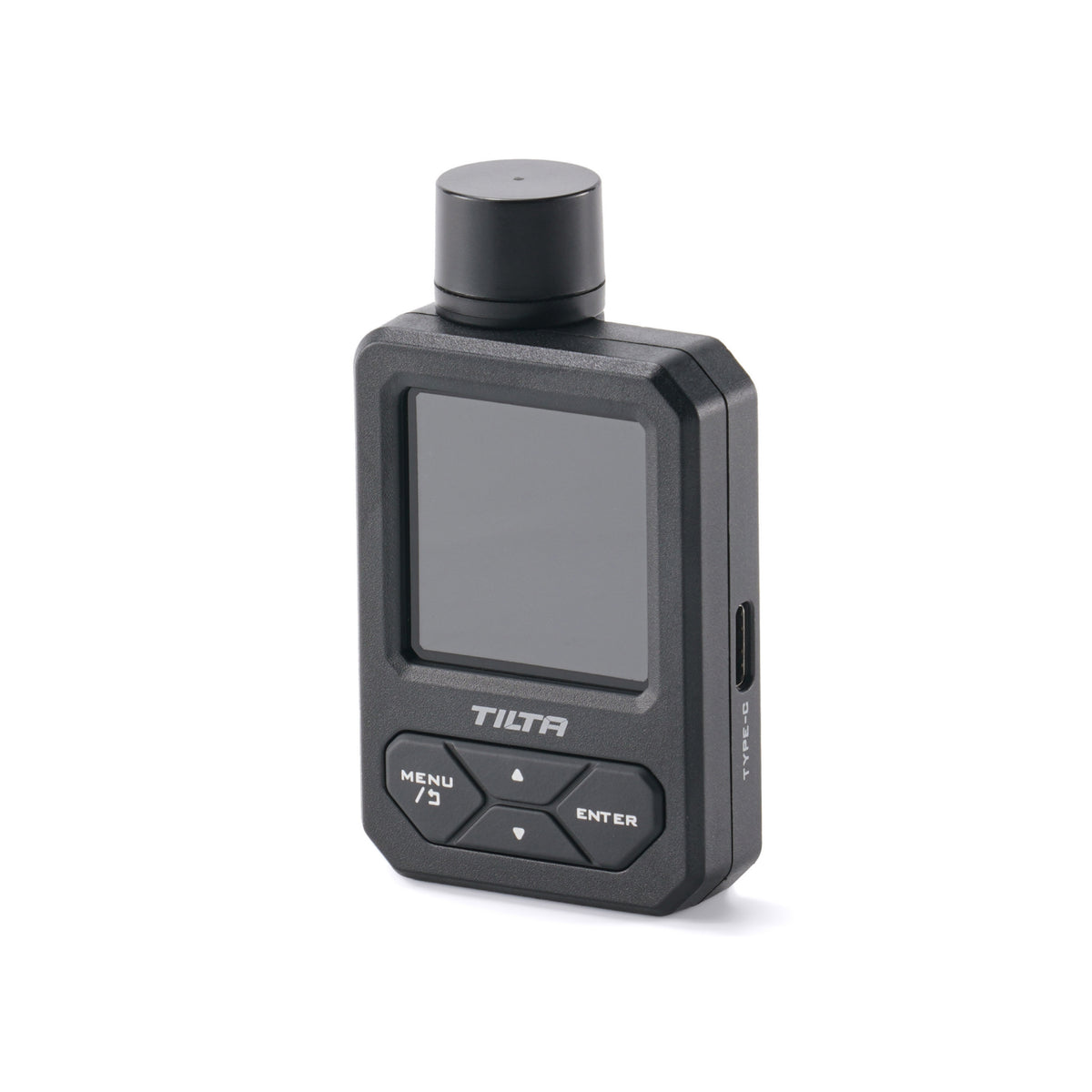








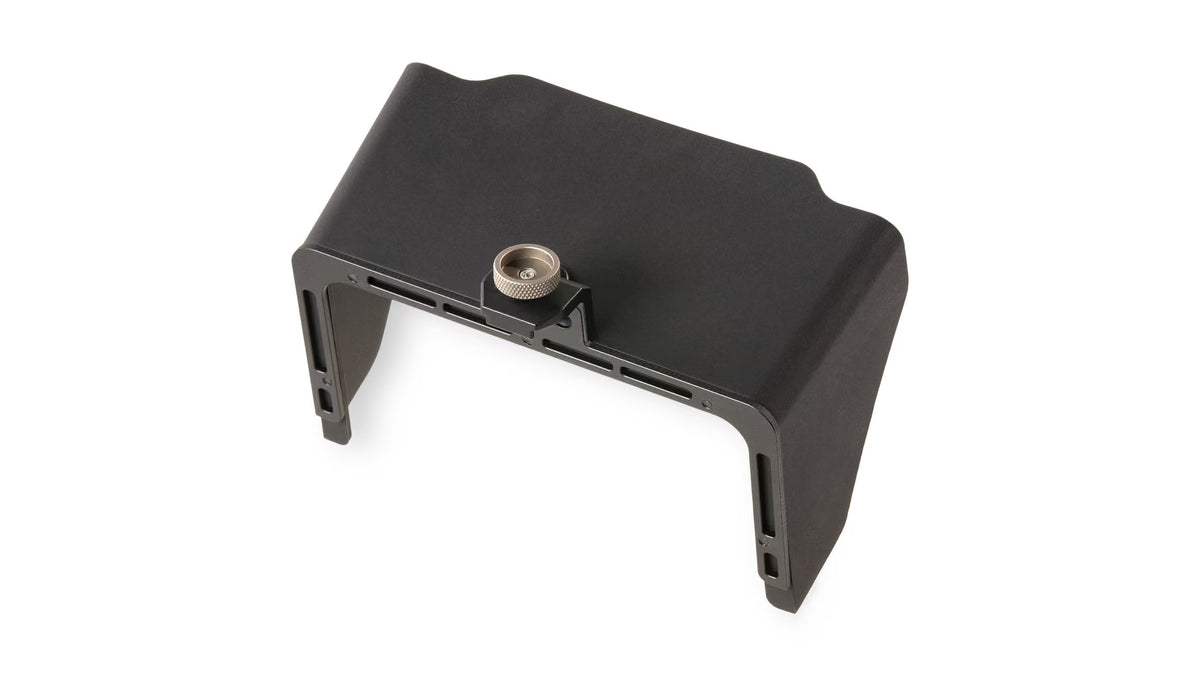
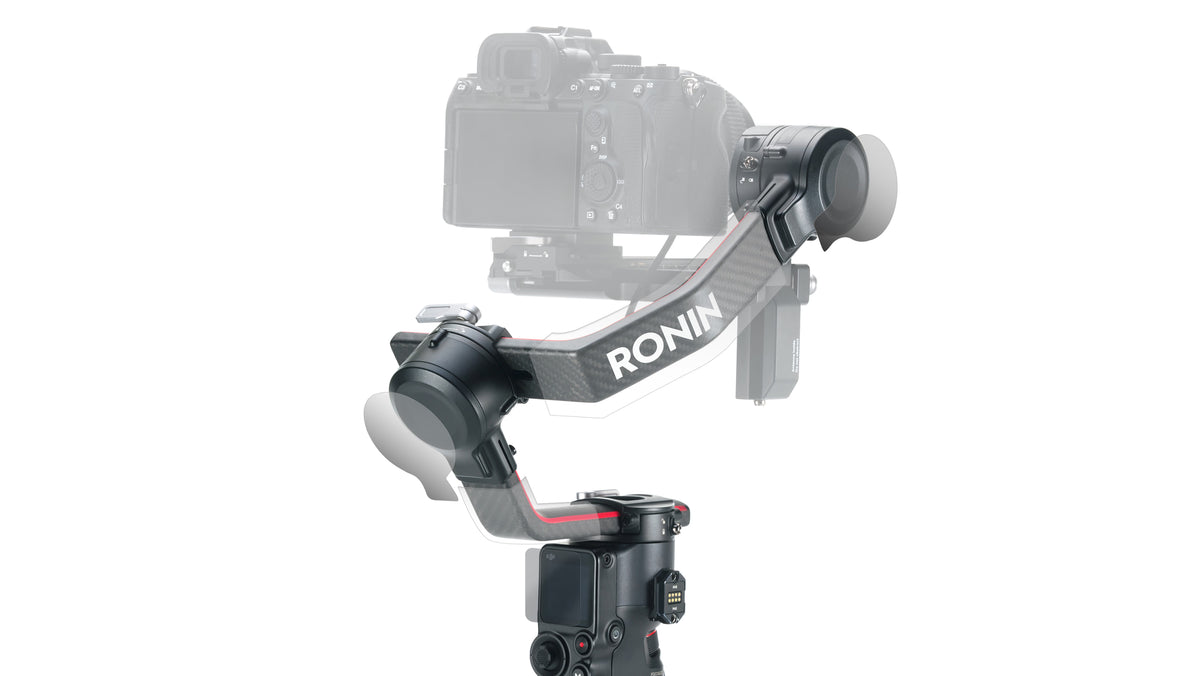


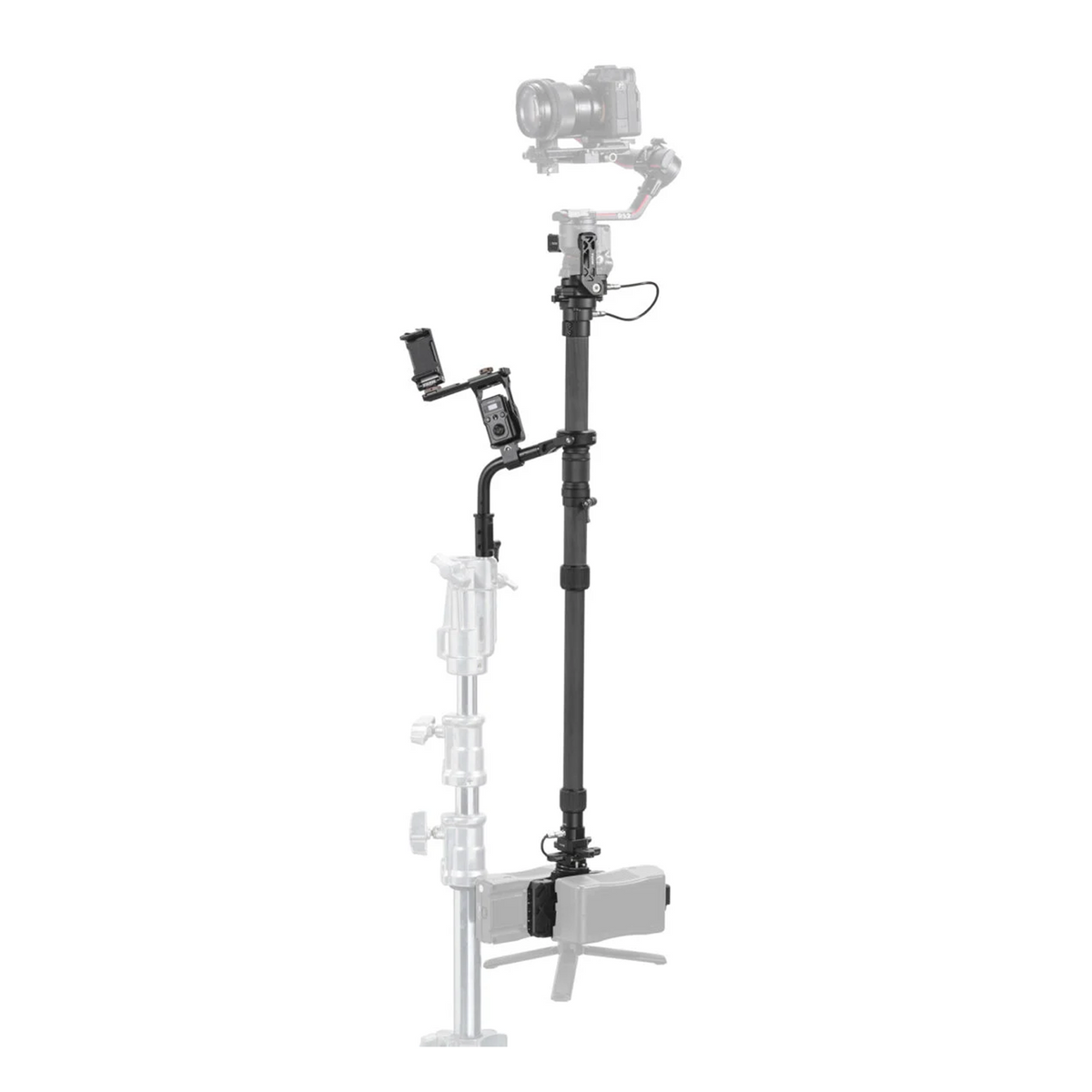
*El envío gratuito no aplica para este artículo* El Sistema Tilta Float funciona junto con el DJI RS 2 y RS3 Pro para proporcionar un sistema estabilizador de cámara pequeño y compacto que permite lograr movimientos cinematográficos suaves con configuraciones de cámara más pequeñas. El poste con contrapeso ofrece una estabilización adicional para tu equipo más allá de lo que ya hace el gimbal, permitiendo el movimiento de cámara libre más fluido posible. El brazo con resorte y el diseño del chaleco de soporte transfieren el peso del equipo a tu torso, permitiendo tiempos de operación más largos antes de que el usuario se fatigue. El Controlador Inalámbrico de Pulgar incluido permite controlar de forma inalámbrica el Ronin así como un motor de enfoque Nucleus M o Nucleus Nano. Esta unidad está diseñada para montarse en el arnés de tu Tilta Float mediante el Soporte para Monitor del sistema. El controlador se alimenta con baterías Go Pro 5-8 y cuenta con un puerto USB-C que puede usarse para futuras actualizaciones de firmware. Ten en cuenta que no recomendamos alimentar la unidad a través de este puerto. El Soporte Inferior para la Espalda y la Correa de Hombro Única incluidos proporcionan una distribución adicional del peso, asegurando una operación cómoda durante cualquier duración. Múltiples opciones de alimentación ofrecen mayor flexibilidad al alimentar el Ronin. El sistema puede alimentar el gimbal mediante Gold Mount, V-Mount, TB50 o el propio Mango de Batería a través de accesorios opcionales. *El Float es compatible con cualquier gimbal bajo el límite de peso que pueda montarse mediante roscas 1/4"-20 y pueda alimentarse vía 2 Pin Lemo o batería interna, sin embargo, solo puede controlar inalámbricamente el RS2 y RS3 Pro* **El Float no tiene salidas de energía aparte del 2 Pin Lemo diseñado para alimentar el RS2** ***El Cable Interno del Poste puede manejar 14.8V y 3A con capacidad máxima para 6A*** RS3/RS3 Pro: La tecla M NO puede imitar la función del gimbal. La tecla M en esta unidad SOLO puede cambiar la configuración de Modo. No se recomienda usar gimbals más grandes que los que podrían clasificarse como "de mano" como el Movi Pro. Incluso si el peso total es menor a 10 kg, el sistema tendrá dificultades para soportar gimbals físicamente más grandes que los gimbals DJI Ronin RS Series.

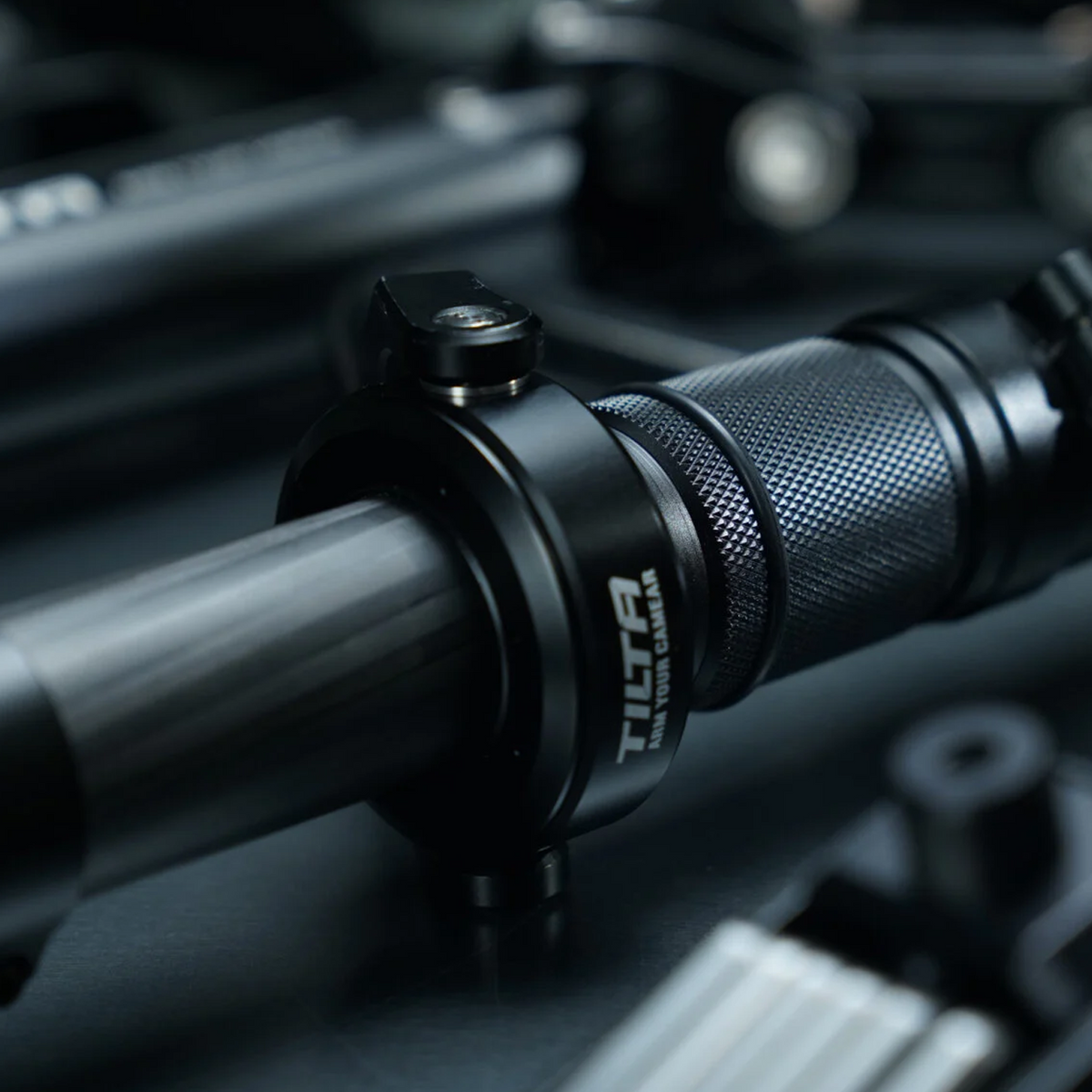
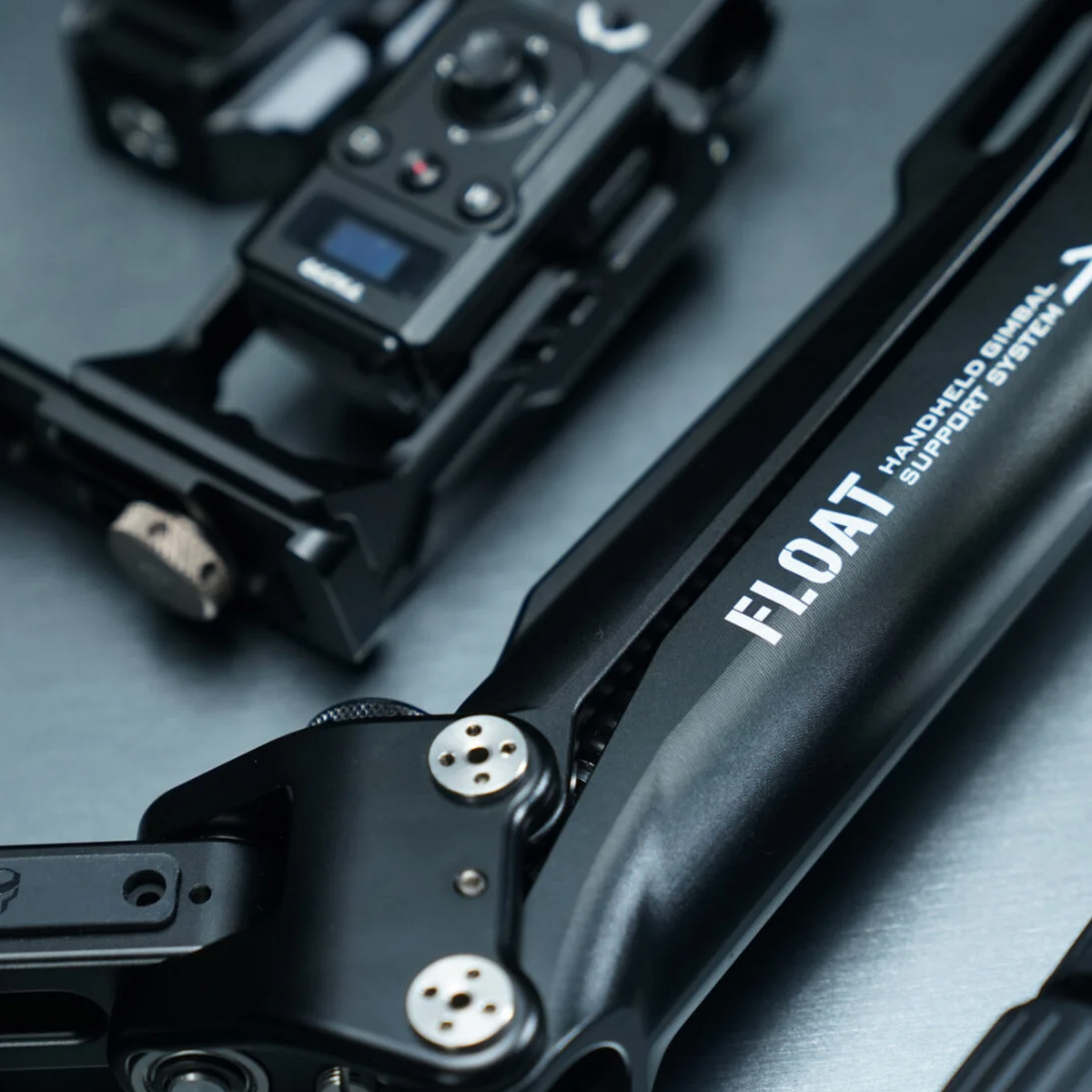
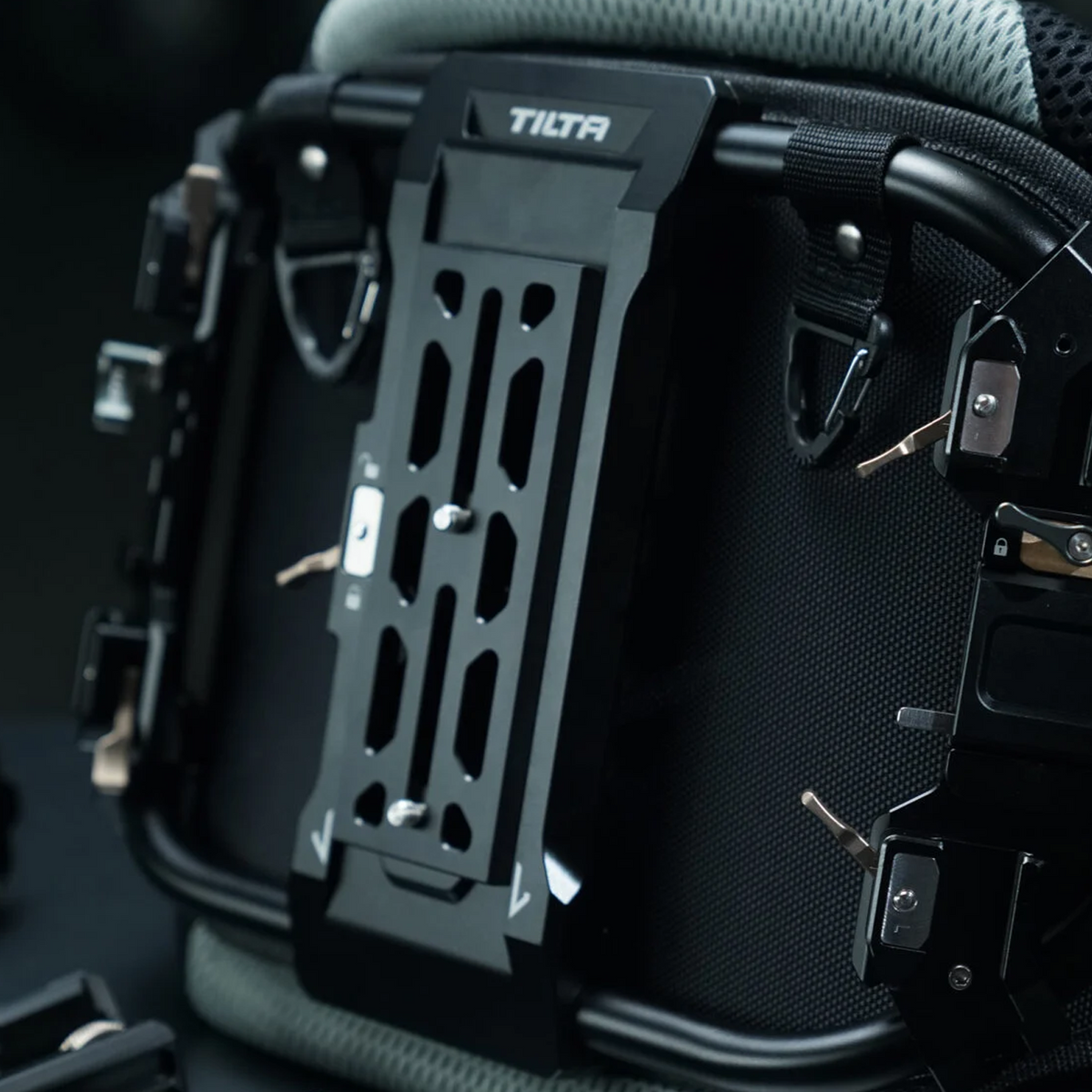

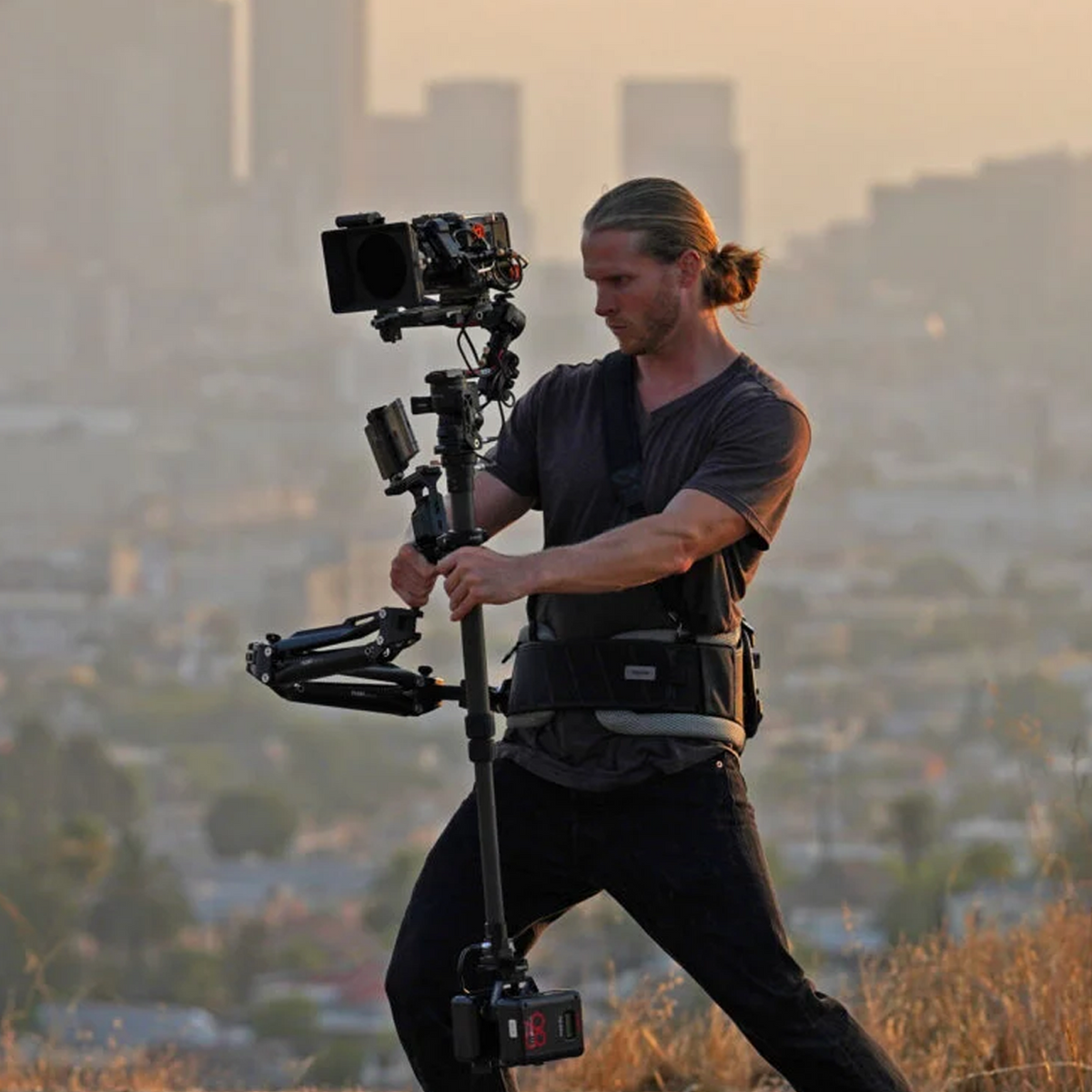
Sistema de soporte para gimbal de mano Tilta Float
Excl. VAT. VAT calculated at checkout
6972835234490
Características clave
- [INCREASED STABILITY] Proporciona más estabilidad y control al operar el Ronin
- [RONIN CONTROL] Soporta el control total del RS2 y RS3 Pro
- [LIGHTWEIGHT] El chaleco de soporte redistribuye el peso para una operación más cómoda durante períodos más largos
- [INCREASED BATTERY] Múltiples opciones de energía proporcionan una mayor duración de batería al Ronin
- [COMPATIBILITY] Compatible con cualquier gimbal que se conecte con roscas 1/4"-20 y pueda alimentarse mediante un conector Lemo de 2 pines
Overview
Packing List
- GSS-T01-V
- 1: Brazo del Sistema Flotante Tilta (GSS-T01-ARM) *1
- 2: Poste del Sistema Flotante Tilta (GSS-T01-PST) *1
- 3: Placa Base de Fuente de Alimentación para RS 2 (TGA-PBP) con Cable (TCB-DTP-2LE-40) *1
- 4: Placa de Batería V Mount del Sistema Flotante Tilta (GSS-T01-BPV) *1
- 5: Cable Lemo de 2 Pines a Lemo de 2 Pines (20 cm) (TCB-2LE-2LE-20) *1
- 6: Chaleco de Soporte del Sistema Flotante Tilta (GSS-T01-SV) *1
- 7: Controlador Inalámbrico de Pulgar para RS 2 (GSS-T01-WTC) *1
- 8: Módulo Receptor de Control Inalámbrico para RS 2 (TGA-WCR) *1
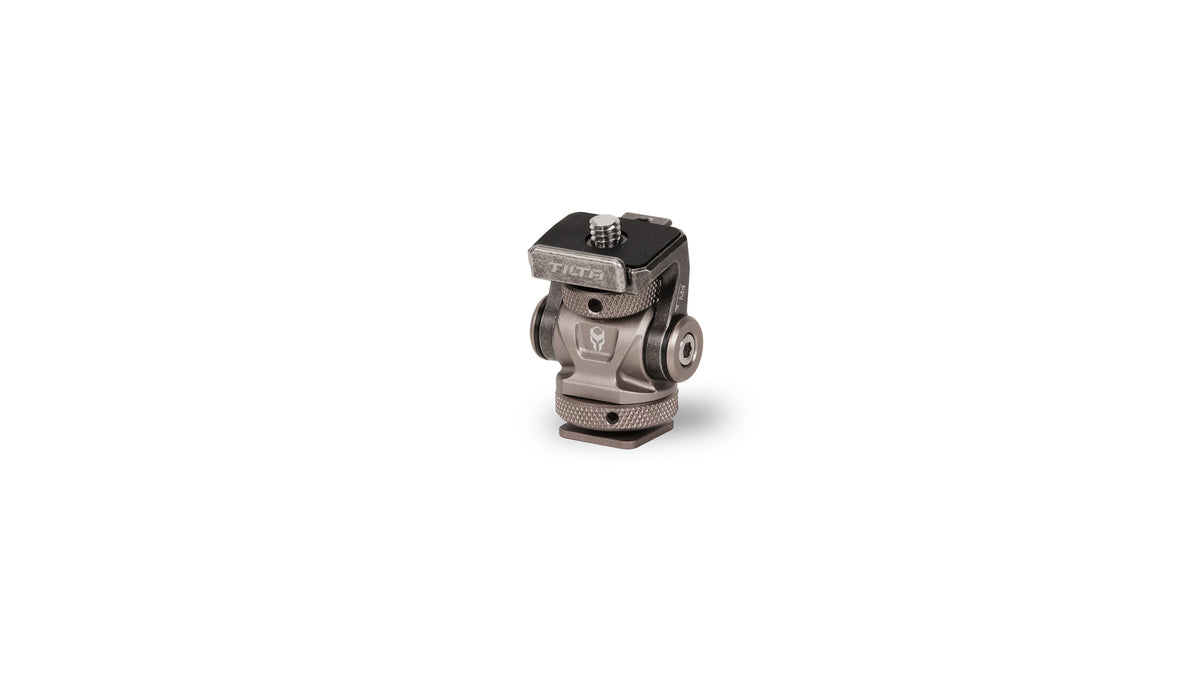
- 9: Soporte para Monitor del Sistema Flotante Tilta (GSS-T01-MB) *1
- 10: Estuche de Transporte del Sistema Flotante Tilta (GSS-T01-CC)
- 11: Soporte Ajustable para Teléfono con Zapata Fría Tiltaing - Negro (TA-PMB-B)
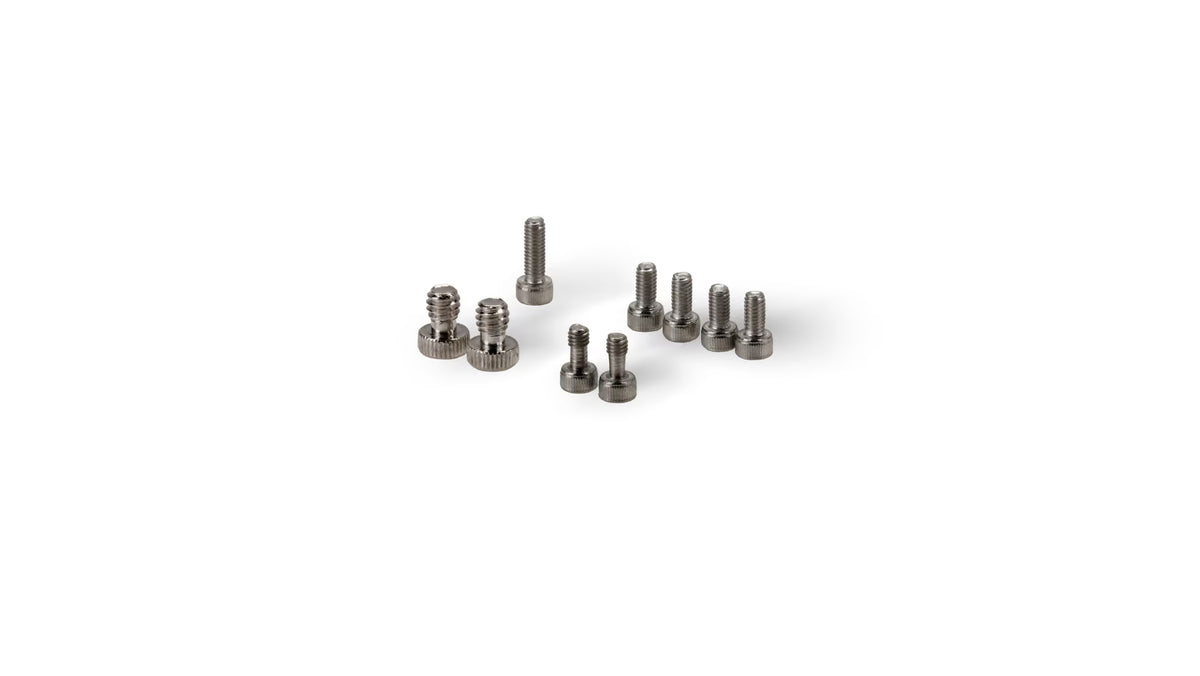
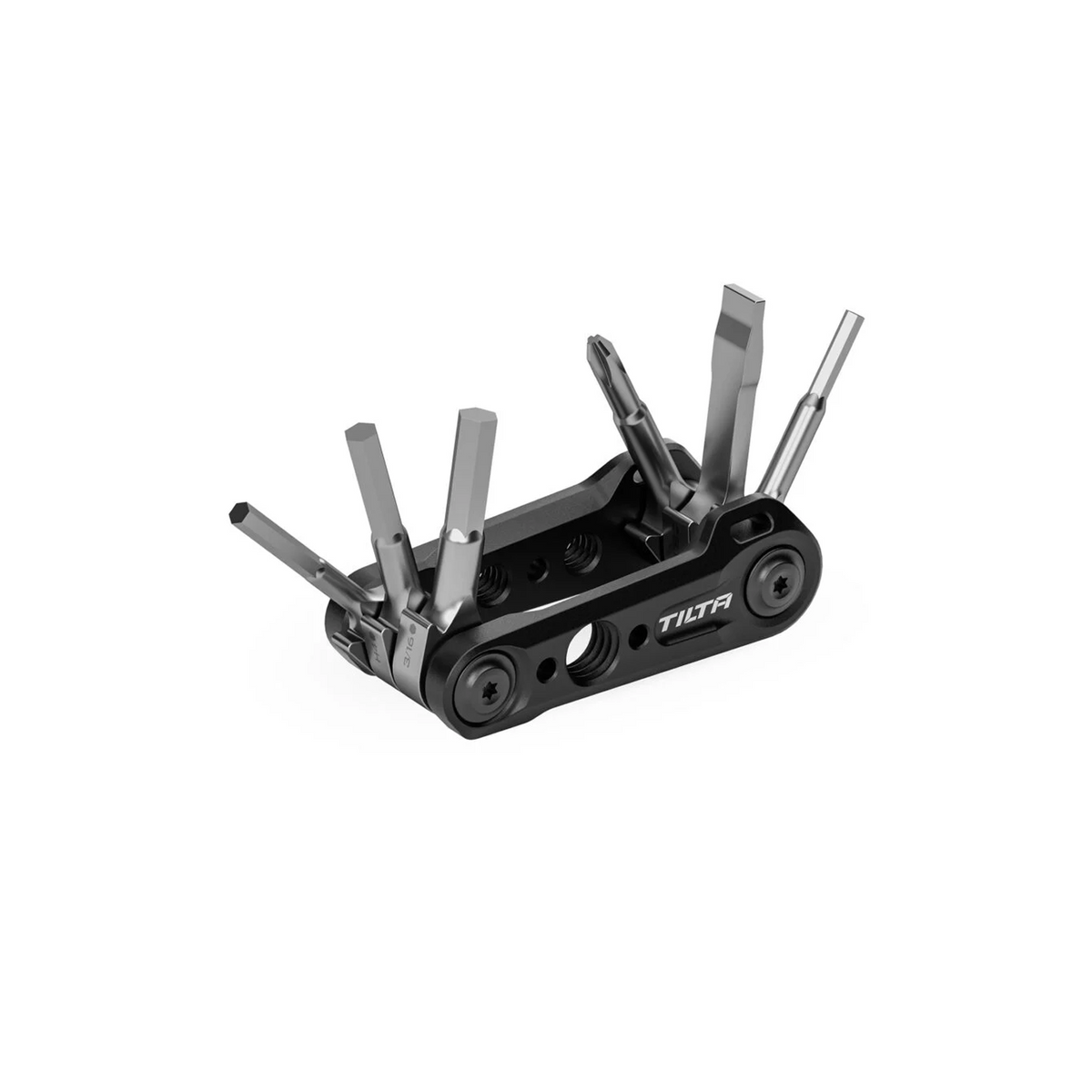
- 12: Kit de Herramientas para el Sistema Flotante Tilta (GSS-T01-TK) *1
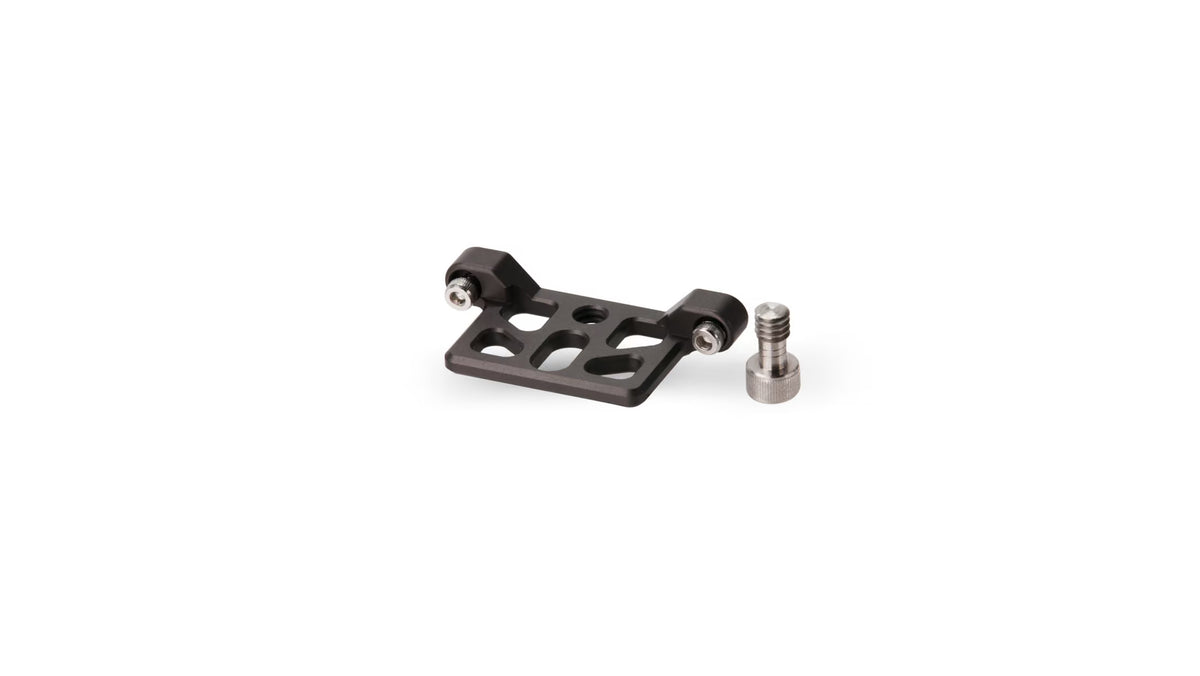
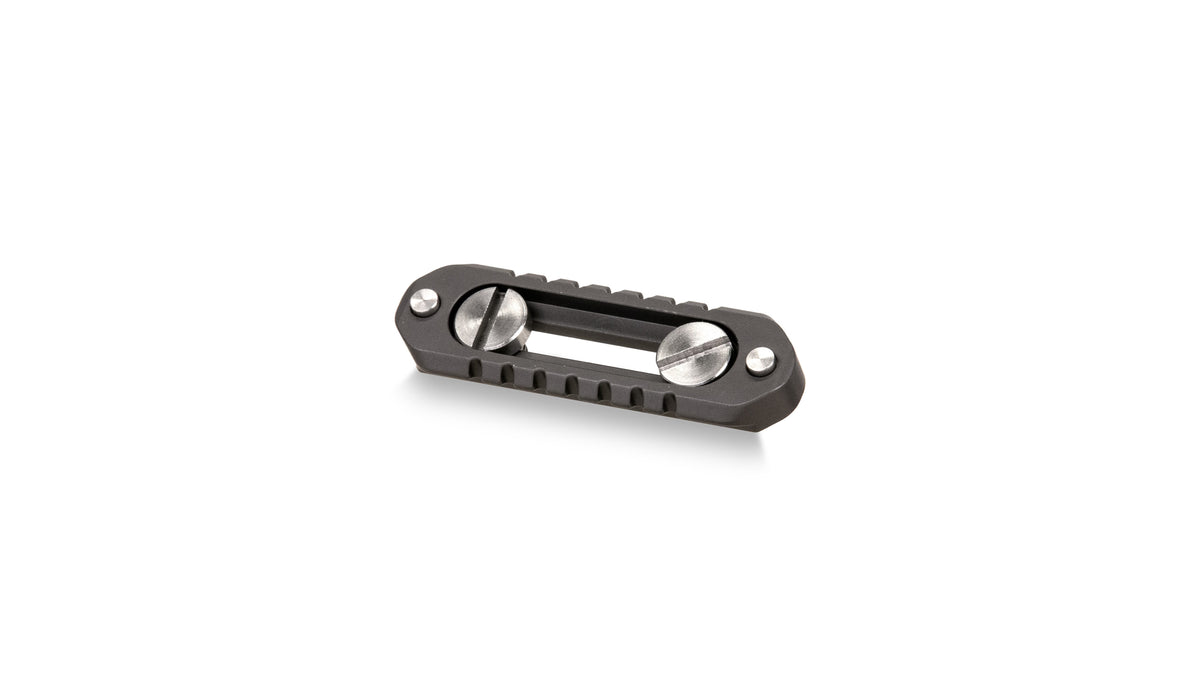
- 13: Montura Cruzada de Riel NATO para Poste del Sistema Flotante Tilta (GSS-T01-CPM) *1
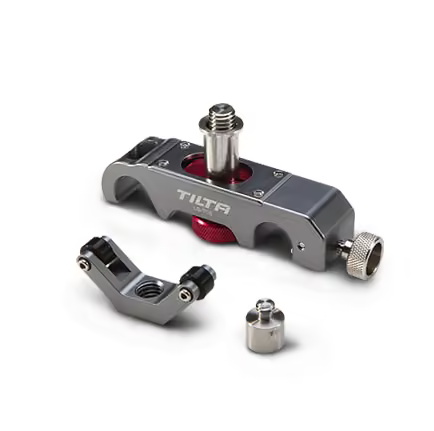
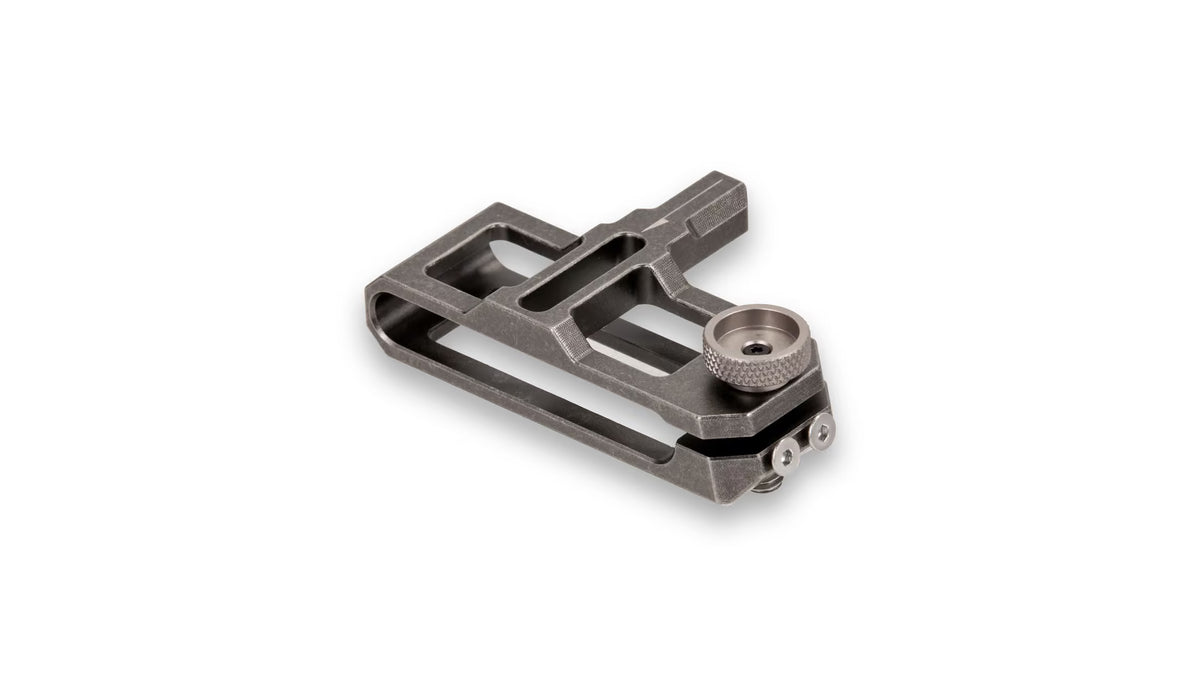
- 14: Adaptador de Acoplamiento Baby Pin para el Sistema Flotante Tilta (GSS-T01-PDA) *1
- GSS-T01-AB
- 1: Brazo del Sistema Flotante Tilta (GSS-T01-ARM) *1
- 2: Poste del Sistema Flotante Tilta (GSS-T01-PST) *1
- 3: Placa Base de Fuente de Alimentación para RS 2 (TGA-PBP) con Cable (TCB-DTP-2LE-40) *1
- 4: Placa de Batería Gold Mount del Sistema Flotante Tilta (GSS-T01-BPAB) *1
- 5: Cable Lemo de 2 Pines a Lemo de 2 Pines (20 cm) (TCB-2LE-2LE-20) *1
- 6: Chaleco de Soporte del Sistema Flotante Tilta (GSS-T01-SV) *1
- 7: Controlador Inalámbrico de Pulgar para RS 2 (GSS-T01-WTC) *1
- 8: Módulo Receptor de Control Inalámbrico para RS 2 (TGA-WCR) *1
- 9: Soporte para Monitor del Sistema Flotante Tilta (GSS-T01-MB) *1
- 10: Estuche de Transporte del Sistema Flotante Tilta (GSS-T01-CC)
- 11: Soporte Ajustable para Teléfono con Zapata Fría Tiltaing - Negro (TA-PMB-B)
- 12: Kit de Herramientas para el Sistema Flotante Tilta (GSS-T01-TK) *1
- 13: Montura Cruzada de Riel NATO para Poste del Sistema Flotante Tilta (GSS-T01-CPM) *1
- 14: Adaptador de Acoplamiento Baby Pin para el Sistema Flotante Tilta (GSS-T01-PDA) *1
Technical Data
Especificaciones del Sistema Tilta Float Dimensiones del producto835x345x210mm Peso del producto: 10kg (Peso neto 7.5kg) Materiales: Fibra de carbono, aluminio, plástico y tela de nylon Sistema Tilta Float Chaleco de soporte Tamaño del chaleco: 600-1200mm Extensión: Placa base de liberación rápida estándar Tilta de 15mm incorporada. Sistema Tilta Float Conector de brazo Diámetro del poste: 12mm Capacidad máxima de carga: 10kg Rango de movimiento vertical: 800mm (¡À4300) Peso: 2.27kg Sistema Tilta Float Poste Material: Fibra de carbono y aluminio Montura: Riel NATO Entrada/salida de energía: LEMO de 2 pines Potencia máxima de entrada: 14.8V, 6A Rango de longitud: 500-1000mm Controlador inalámbrico de pulgar Tilta para RS2 Montura cold shoe Módulo inalámbrico 2.4 GHz Alcance del control remoto: 50-70m (Dependiendo de la ubicación, puede haber una ligera variación.) *El controlador inalámbrico de pulgar requiere una batería GoPro Hero 5-8 para funcionar, la cual no está incluida* Soluciones de alimentación 1. Batería V-mount 2. Batería Gold mount 3. Batería DJI TB50 4. Empuñadura de batería RS2 Dimensiones: 35 x 10 x 18 cm Peso: 48 kg Peso neto: 16.5 kg Materiales: Aleación de aluminio, acero inoxidable, fibra de carbono, plástico y tela de nylon Color: Negro
También te puede gustar
- 5 stars: 6 (43%)
- 4 stars: 5 (36%)
- 3 stars: 3 (21%)
- 2 stars: 0 (0%)
- 1 star: 0 (0%)
Fantastic feel and almost intuitive to use. Very ergonomic.
I would have loved to use my Dji gimbal with this, but parts were missing and it was impossible to put together. When I had to return it, I had to pay close to $70 to ship it back since I bought it directly from the company's website and not Amazon. Some little screws and springs were just randomly in the box and I didn't know where those springs came out of. I got a full refund, minus about 30$ so I lost around $100 on this adventure. it was worth it though. I think the idea is amazing and much cheaper than Ariri Trinity system. It made me look into other systems that won't require batteries. Another downside to this was that the battery was not included. So not only were a lot of parts missing, but the batteries were not included and it felt that I would have to gather bits and pieces of parts from all over the place to be able to put this thing together. It would be nice is this Tilta Float came with everything included to put the system together.
I would appreciate it if the shipping to Hawaii weren't an arm and a leg. There are considerations for foreign shipments. Perhaps a different carrier for Hawaii and Alaska. Also, the support with assembly and balancing is either third party or in Chinese. One would think that there are enough sales to English speaking countries to properly support this product, affording the English speaking buyers the respect that any customer deserves. Its not like producing an English version is difficult for Tilta.
Fantastic. Takes some time to learn. But once you get it you'll be amazed. The advance ring is probably the better overall equipment for most people. But I wanted to try out the float.
This is my first stabilizer. I researched it from the time it came out before I made a decision. It is very well made! It took a bit of experimenting to figure out what side I wanted the arm to be on as I am right handed, I figured that was were it should be but found the inverse worked much better. As for balancing, where the hell do you get a stand? I must be calling it the wrong thing as I can't seem to get any results in a search.
So I tried some various tests to see how this thing reacted. I was very impressed that I could walk up and down a flight of stairs with practically no bounce! I have a Ronin 1, which I still love and an RS2. This is going to save my shoulders!
Now to the flaw: there is a supplied back extension to support the weight on the upper back. The only problem is that it covers an area about the size of one vertebra and puts a LOT of pressure on that resting point. I would suggest increasing the size of this pad and giving it a bit of a curve to conform to the spine. The reason being that the fastening point of the arm creates torque at the center point of the back of the vest, forcing more leverage on the extender. If the back rest were larger, the weight could be distributed over a larger area resulting in less pounds per square inch. I will be making one out of carbon fiber and then of course covering one side with foam.
All that aside, I'm really going to enjoy this thing!
It?‘s hard to balance the roll axis but I believe once I master that this piece will be the most valuable piece in my arsenal!
System looks very well made but from a former Steadicam operator this doesn?‘t look like a total replacement. Still a little strange to navigate but it looks like it will do the job.
I am very impressed with the Tilta Float system. As a trained/experienced STEADICAM operator, I have a great number of things I would like to see improved in the system to make it a viable option for a professional use. Just for example: HDMI connector from the top to the bottom, additional power options, stronger arm to support heavier weight set ups. Those are just a few of my top complaints. But like I said, it is a very good system four semi-pro use.
This product is extremely well made. I ordered early and perhaps because it was one of the first to ship, our Float arrived missing a rosette essential to its operation. The staff at Tilta in Burbank was able to get me the rosette and I?‘m now up and running. We are still in the early stages of testing, but everything looks very promising. The Float is machined beautifully, and just fits. I didn?‘t find the pressure on my hips or back excessive. A few suggestions for users: 1) Use identical batteries on the mount at the bottom - this will make balancing much easier. 2) For most moves, the wireless thumb control makes it easy to control the gimbal. For complicated moves, think about using the Raven Eye setup on the RS2 with Force Mobile to control the gimbal. There can be a lot going on for the Float operator, and having an operator for the RS2 makes complex moves much simpler. 3) Think about using a Nucleus Nano for focus. This means the gimbal operator, using Force Mobile on the RS2, can also pull focus. 4. We?‘re using a C stand to carry the spud that comes with the Float which allows you to park the arm and take the load off. There?‘s going to be a learning curve for us, but all in all I think this system is going to change the way we work dramatically.
Ok, just working with this rig, but love what this can do. The new mod for additional balance, is a plus. Build quality excellent!
Living this product so far, but the fact that the belt doesn?‘t fit anyone who isn?‘t super skinny is really awful and disappointing. There?‘s just no reason for it to be so small. I look absolutely ridiculous wearing it because it doesn?‘t close and I have to use a belt on it. I never thought I?‘d be body shamed by a piece of equipment. But Tilta made sure I felt horrible about myself!
Good 1st generation system from Tilta but some key improvements would make this much better.
First, the support cushion that goes into the small of your back puts so much undo pressure into your lower spine which causes you to not be able to carry the weight for extended periods of time. They really need a shoulder harness of some sort instead to be able to take up the forward load of the system. As it stands now, all the load goes right into your lower back. I have no Idea how they couldn?‘t catch this when they designed the system and I caught it right on my first day using the system. Huge oversight to say the least since weight and load distribution is key for a camera carrying rig.
Second, they need to have the weight distribution of the batteries on the bottom of the post to be further away from the center of mass. Having the batteries right on the post and not further away, allows for the post to yaw left and right too easily. Just look at any good Steadicam system and you?‘ll understand why the weight is distributed further away from the post. Having the weight further away allows for the inertia to keep the system from unintentionally yawing.
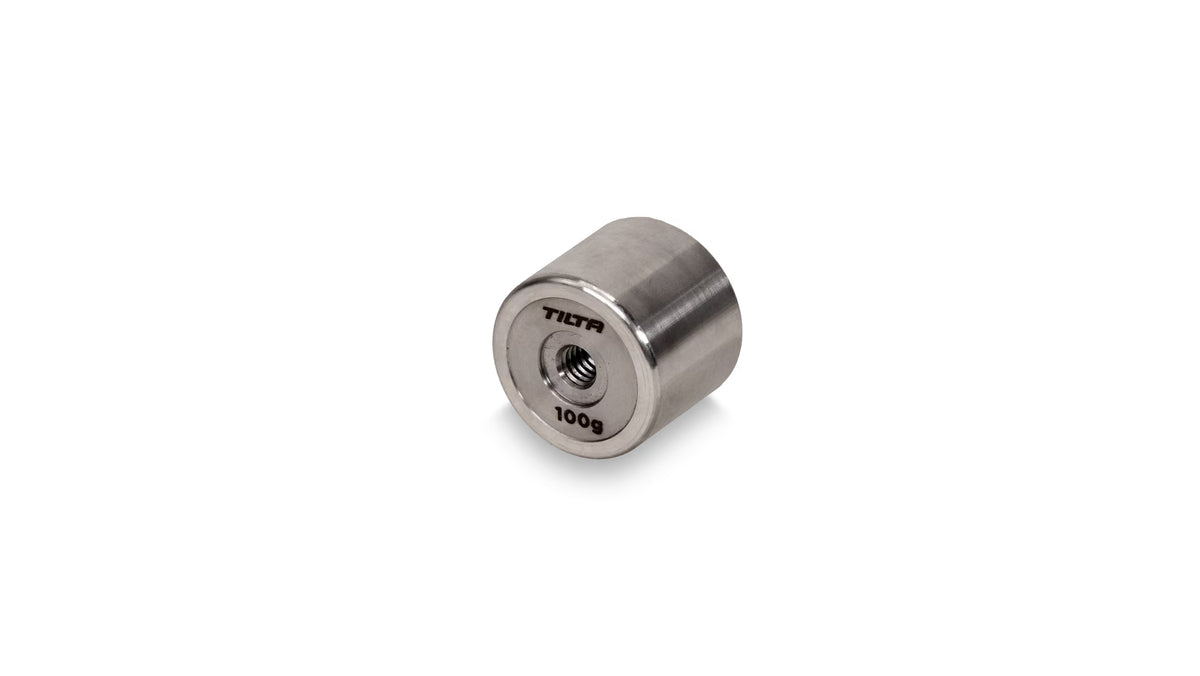
Third, the counter weight bracket should also come standard with the kit. There is no way to dynamically balance the rig at all angles like the Arri trinity without this swinging weight to offset the balance at different angles.
Forth, I?‘m a tall guy but the Belt-Vest barely gets around my waist. I?‘m 6??240 pounds. Maybe I just need to lose a bit of weight. This belt will not fit guys who are bigger with a belly.
And last but not least. Have a quick release system, and dynamic adjustments for the spring arm. Having to constantly trial and error the position of the arm to the belt is such a time killer on set. A tried and true socket block like all the other Steadicam systems the only way to go. Not sure who decided that this slow backwards method was the way forward in the year 2021.
If you guys can sort out these very fundamental details that are a necessity, you?‘ll have a winning system on your hands.
The quality of parts is absolutely top notch. Now let?‘s get the fundamentals to match so you can kill the game!
I haven't had time to fully test my new Float system yet, but my first impression is that it is generally well made and is a great value for the money. It does have some issues though, speaking from my experience of Steadicam operating since I bought my first Steadicam 30 years ago. Users shouldn't have to self-manufacture a shim to ensure a proper fit between the post and the gimbal. I really wish that Tilta had designed a proper vest that more evenly distributes the load across hips/shoulders/back, rather than just the hips. What Tilta calls a "Tilta Float System Baby Pin Docking Adapter" should be simply called a Balancing Pin Adapter. A proper docking bracket has on one end a yoke and safety pin that will dock and secure the rig in an upright position during breaks, and a balancing pin on the other end. I haven't yet succeeded in getting a 1-2 second roll-back to neutral position (screen facing up) when post is horizontal...it's much faster. Hopefully I'll get that tweaked in time...as I said, I haven't spent much time with it yet. Wish list: rack-and-pinion gear x-y adjustments with scale markings for fine tuning balance. I am finding that it does require a little different skill-set as opposed to traditional Steadicam. All in all, I'm really excited about using this, especially hard mounting it on my modified Segway as seen here: http://www.redzephyrcam.com/Paul_Kalbach__ArtichokePro_presents.html
i do have my first music video ever coming in next week , and been waiting for so long now , hope i got it on time :/


